

Medical Behavioral Support
Weight Loss Coaching
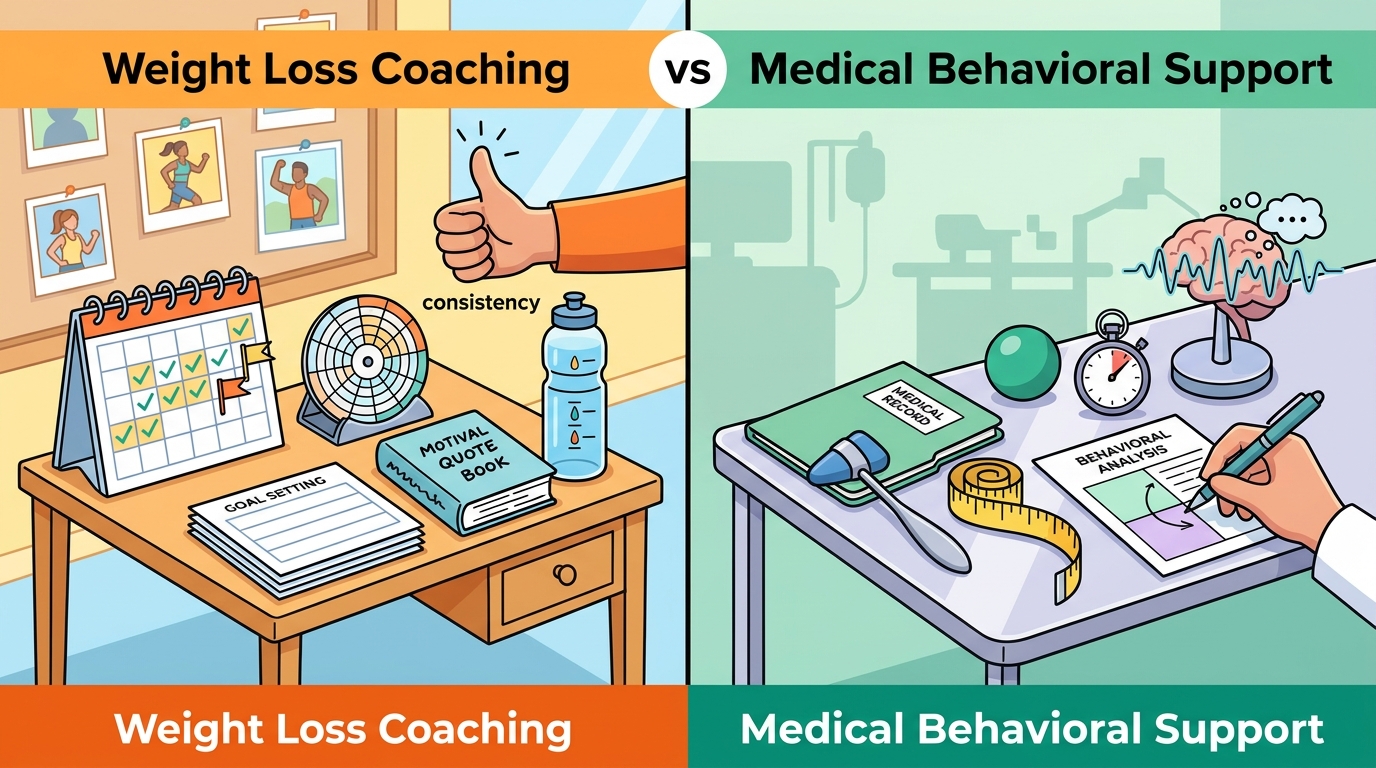
Weight loss coaching is a non-clinical service focused on accountability, motivation, and habit tracking. Coaches are typically certified in lifestyle management but are not licensed medical providers. They help clients set goals, track food intake, and maintain consistency. The strength of this model is its focus on daily behavior and mindset. It can be highly effective for individuals who struggle with motivation or need external accountability. However, it lacks the authority to diagnose medical conditions or prescribe medication. It does not provide clinical oversight for complex health issues. This approach suits readers who are generally healthy but need help staying on track with lifestyle changes. It is less appropriate for those with significant medical comorbidities or a history of eating disorders.
Comparison Table
| Provider Credentials | Licensed medical or clinical professionals | Certified lifestyle coaches |
| Focus Area | Physiological and psychological health | Habit formation and motivation |
| Best For | Complex health histories and comorbidities | General lifestyle habit building |
| Risk Management | High, with clinical protocols | Low, but lacks medical safety net |
Decision Guidance
Frequently Asked Questions
Can I switch from coaching to medical support?
Is medical behavioral support more expensive?
Do I need a referral for medical behavioral support?
Referrals are not always required, but they can be helpful. Many medical spas and clinics accept self-referrals. A referral from your primary care physician can provide additional context for your medical history.
What if I have a history of eating disorders?
How long does medical behavioral support take?
The duration varies based on individual health goals and progress. It is typically an ongoing process that adjusts as your body and health status change. There is no fixed timeline, as the focus is on sustainable health rather than rapid results. Learn more: reenvisionmedspa com.