

Radiofrequency Microneedling
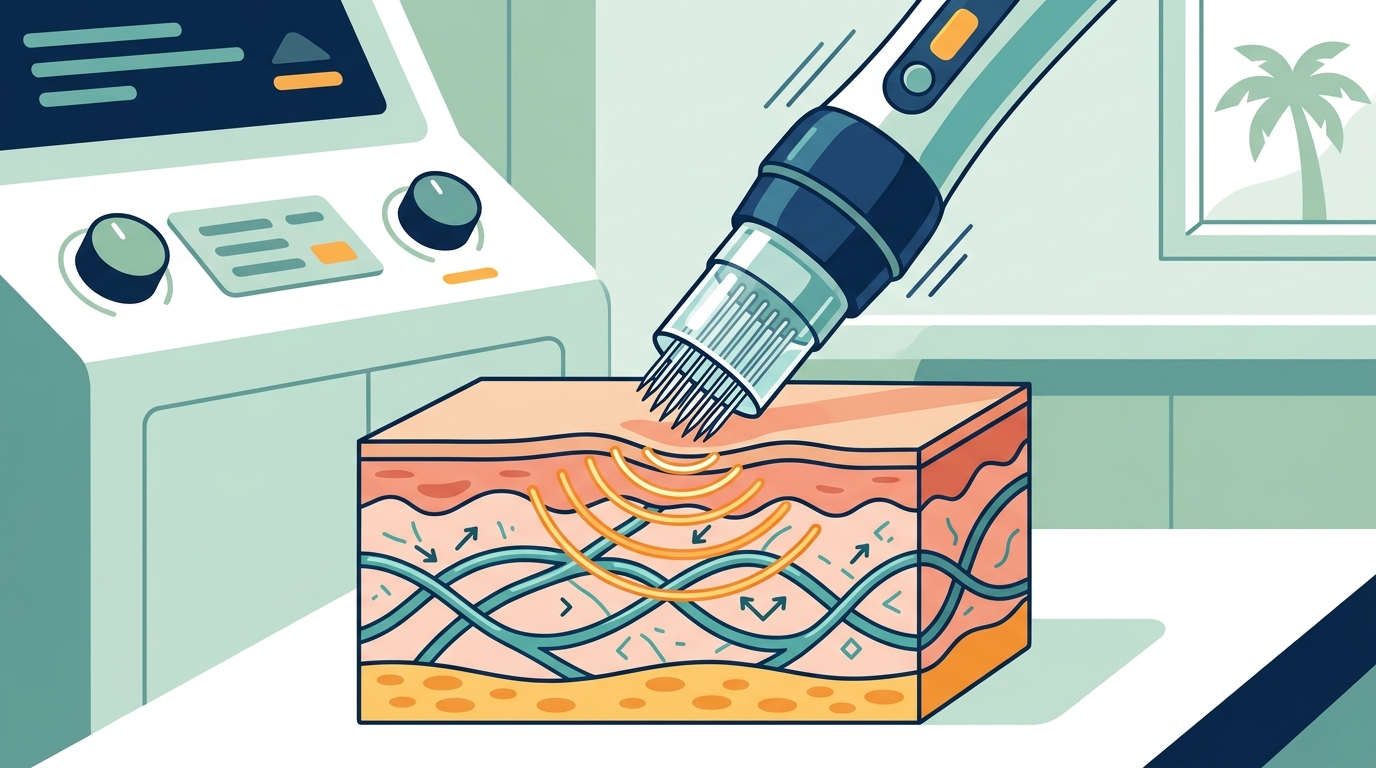
Radiofrequency microneedling is a minimally invasive procedure that combines microneedling with radiofrequency energy to stimulate collagen production deep within the dermis. The insulated needles penetrate the skin to deliver heat directly to the target tissue, bypassing the surface layer. This approach minimizes downtime while maximizing tissue remodeling. It is particularly effective for moderate skin laxity and textural irregularities. For additional details, review the reenvisionmedspa com.
Mechanism of Action
The device creates micro-channels in the skin, triggering the body's natural wound healing response. Simultaneously, radiofrequency energy heats the dermis to a therapeutic temperature. This dual action promotes the synthesis of new collagen and elastin fibers. The result is firmer, smoother skin with improved elasticity over time. For additional details, review the .
Ideal Candidates
This treatment suits individuals with mild to moderate sagging, acne scars, or enlarged pores. It is a versatile option for the face, neck, and body. Patients typically experience minimal redness and swelling that resolves within a few days. ReEnvision Aesthetics and MedSpa customizes the depth and energy settings based on your specific skin type and concerns. For additional details, review the Customer Experience.
Ultrasound Tightening
Deep Tissue Targeting
Unlike surface-level treatments, ultrasound energy penetrates to a precise depth. This allows for targeted tightening of the jawline, cheeks, and forehead. The procedure is painless and requires no anesthesia. Most patients return to their daily activities immediately after the session. The effects build gradually over three to six months as new collagen forms. For additional details, review the Frequently Asked Questions.
Comparative Advantages
Monopolar Radiofrequency
Surface vs. Deep Heating
Monopolar RF can target both superficial and deep dermal layers depending on the device settings. It is often used for the face, neck, and body areas. The treatment is comfortable and requires no downtime. Patients may experience mild warmth during the procedure. The results are subtle but cumulative, improving skin quality with repeated sessions. For additional details, review the About.
Combination Therapy
Monopolar RF is frequently combined with other modalities for enhanced results. It pairs well with microneedling or ultrasound for a comprehensive tightening protocol. This combination approach addresses multiple skin layers simultaneously. ReEnvision Aesthetics and MedSpa designs personalized protocols that leverage the strengths of different technologies.
Fractional Laser
Fractional laser is a resurfacing treatment that creates microscopic columns of thermal injury in the skin. The untreated tissue between the columns allows for rapid healing. This process stimulates significant collagen remodeling and improves skin texture and tone. It is highly effective for sun damage, fine lines, and mild laxity.
Ablative vs. Non-Ablative
Ablative fractional lasers remove the outer layer of skin, offering more dramatic results but with longer downtime. Non-ablative fractional lasers heat the dermis without removing the surface, resulting in less downtime but more gradual improvement. The choice depends on your skin condition and lifestyle. Both types are safe and effective when performed by experienced practitioners.
Recovery and Maintenance
Recovery time varies by laser type and intensity. Ablative lasers may require one to two weeks of downtime, while non-ablative lasers require a few days. Sun protection is critical during and after treatment to maintain results. ReEnvision Aesthetics and MedSpa provides detailed aftercare instructions to ensure optimal healing and outcomes.
Collagen Stimulating Injectables
Types of Biostimulators
Strategic Placement
Treatment Course Duration
The duration of a treatment course depends on the specific technology and your individual goals. Most skin tightening treatments require multiple sessions for optimal results. The spacing between sessions allows the skin to heal and remodel. Consistency is crucial for achieving and maintaining long-term improvements.
Session Frequency
Radiofrequency microneedling and monopolar RF typically require three to five sessions spaced four to six weeks apart. Ultrasound treatments may be performed in a single session or as a series of two to three sessions. Fractional laser courses often involve three to six sessions depending on the severity of the concern. Your provider will recommend a personalized schedule based on your skin's response.
Long-Term Maintenance
Treatment Comparison
| Treatment | Primary Mechanism | Downtime | Best For |
|---|---|---|---|
| Radiofrequency Microneedling | Deep heating via insulated needles | 1-3 days | Moderate laxity, texture, scars |
| Ultrasound Tightening | Focused deep tissue heating | None | Deep structural laxity, lifting |
| Monopolar Radiofrequency | Uniform dermal heating | None | Overall firmness, contouring |
| Fractional Laser | Micro-columns of thermal injury | 3-14 days | Sun damage, fine lines, texture |
| Collagen Stimulating Injectables | Biostimulatory collagen production | Minimal | Skin quality, gradual improvement |
Key Takeaways
- Radiofrequency microneedling combines microneedling with RF energy for deep collagen stimulation.
- Ultrasound tightening targets the SMAS layer for non-surgical lifting effects.
- Monopolar radiofrequency provides uniform heating for overall skin firmness.
- Fractional laser resurfaces the skin to improve texture and tone.
- Collagen stimulating injectables encourage natural collagen production for long-term quality improvement.
- Most treatments require a series of sessions spaced weeks apart for optimal results.
- Personalized assessment is essential to determine the best treatment combination for your goals.
Frequently Asked Questions
How many sessions are needed for skin tightening?
Most skin tightening treatments require three to five sessions spaced four to six weeks apart. The exact number depends on the technology used and your individual skin response. Your provider will recommend a personalized schedule during your consultation.
Is ultrasound tightening painful?
Ultrasound tightening is generally painless and requires no anesthesia. Most patients describe the sensation as a mild warming or tingling. You can return to your daily activities immediately after the procedure.
What is the downtime for fractional laser?
Downtime for fractional laser varies by type. Ablative lasers may require one to two weeks of recovery, while non-ablative lasers require a few days. Sun protection is critical during and after treatment to maintain results.
Can I combine different skin tightening treatments?
Yes, combining different treatments can enhance results. For example, radiofrequency microneedling can be paired with ultrasound for comprehensive tightening. Your provider will design a protocol that leverages the strengths of multiple technologies.
How long do the results last?
Results from skin tightening treatments are long-lasting but not permanent. The effects build over three to six months and can last for one to two years. Maintenance sessions are recommended to sustain results over time.
Who is a good candidate for collagen stimulating injectables?
Collagen stimulating injectables are ideal for patients seeking gradual, natural-looking improvement in skin quality. They are suitable for those with mild to moderate laxity who want to enhance skin firmness without significant downtime.