

Choosing Between Botox and Dermal Fillers for Aging
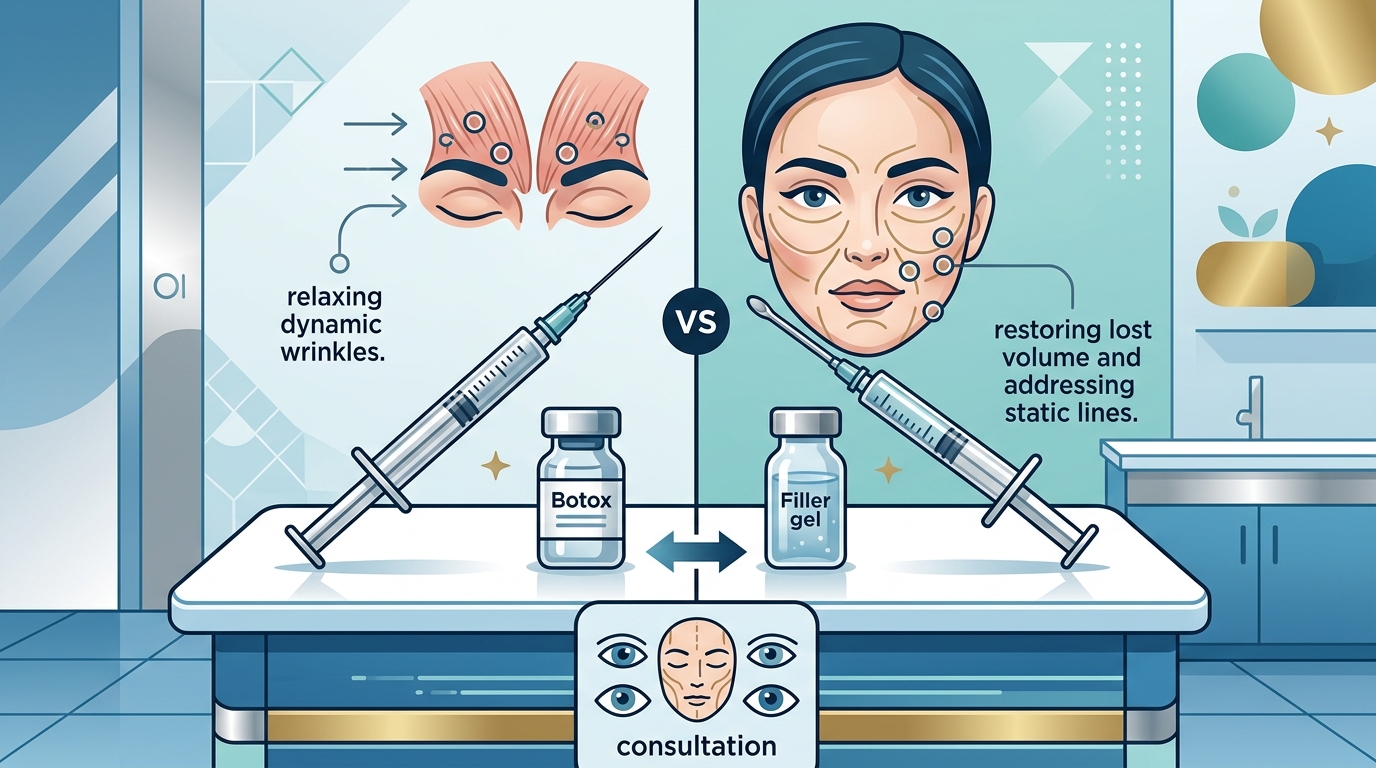
Choosing between Botox and dermal fillers depends on whether you want to relax muscle movement or restore lost volume. Botox targets dynamic wrinkles caused by muscle contraction, while fillers address static lines and volume loss. At ReEnvision Aesthetics and MedSpa in Simi Valley, we help patients determine which treatment, or combination, best fits their facial anatomy and aging goals.
Understanding the Mechanisms
To make an informed decision, you must understand that these two treatments solve different biological problems. Botox is a neurotoxin that temporarily blocks nerve signals to specific muscles, preventing them from contracting. This relaxation smooths out lines that appear only when you move your face, such as frown lines or crow's feet. Dermal fillers are injectable gels, often made of hyaluronic acid, that physically add volume to the skin. They lift and plump areas where fat pads have shrunk or collagen has degraded over time. For additional details, review the Botox ReEnvision Aesthetics and.
Dynamic vs. Static Lines
Anatomical Considerations
Combination Approaches
Many patients assume they must choose one treatment over the other. In reality, the most natural-looking results often come from a strategic combination of both. This approach, often called a "liquid facelift" or comprehensive facial rejuvenation, addresses multiple layers of aging simultaneously. By treating the muscles and the volume loss together, we can achieve a balanced, harmonious result that looks refreshed rather than overdone. For additional details, review the Facial Fillers ReEnvision Aesthetics.
The Synergy of Botox and Fillers
Botox and fillers work synergistically. For example, treating the nasolabial folds (the lines from the nose to the mouth) with filler alone can sometimes look unnatural if the surrounding muscles are still pulling the skin downward. Adding Botox to the muscles around the mouth can relax these pulls, allowing the filler to sit more naturally. This combination creates a smoother transition between the cheek and the mouth. For additional details, review the Fillers Archives.
Strategic Placement
When Combination is Not Necessary
Not every patient needs both treatments. If your primary concern is crow's feet and you have full cheeks, Botox alone may be sufficient. Conversely, if you have significant volume loss in the temples but smooth forehead lines, fillers might be the better choice. A thorough consultation helps determine if a single treatment can achieve your goals or if a combination is required for optimal results.
Treatment Duration and Longevity
One of the most common questions patients ask is how long the results will last. The duration of Botox and fillers differs significantly due to their different mechanisms of action. Understanding these timelines helps you plan your maintenance schedule and budget accordingly.
Botox Longevity
Botox results typically last between three and four months. The neurotoxin gradually wears off as the nerve endings regenerate and the muscles begin to contract again. Regular treatments every three to four months can help maintain a consistent, smooth appearance. Over time, some patients find that their muscles become less active, potentially extending the duration of results slightly, though this varies by individual.
Filler Longevity
Dermal fillers generally last longer than Botox. Hyaluronic acid fillers, which are the most common type, typically last between six and eighteen months. The exact duration depends on the specific product used, the area treated, and your individual metabolism. Areas with high movement, such as the lips, may break down filler faster than areas with less movement, such as the cheeks. Thicker fillers used for structural support tend to last longer than thinner fillers used for fine lines.
Maintenance Schedules
Creating a maintenance schedule is essential for long-term success. For Botox, a quarterly schedule is standard. For fillers, a semi-annual or annual touch-up may be sufficient. Combining both treatments requires a coordinated plan. For instance, you might receive Botox every three months and filler every twelve months. This staggered approach ensures that your face always looks its best without requiring simultaneous appointments for both treatments.
Decision Framework for Patients
Choosing the right treatment involves evaluating your specific concerns, facial anatomy, and lifestyle. The following framework helps you determine which treatment, or combination, is best for you.
Assessing Your Primary Concerns
Start by identifying your top three concerns. Are they lines that appear when you smile? Are they hollow cheeks? Are they deep frown lines? If your concerns are primarily dynamic, Botox is likely the first step. If your concerns are primarily volume-related, fillers are the priority. If you have both, a combination approach is recommended.
Evaluating Facial Anatomy
Your facial structure plays a significant role in treatment selection. Patients with thinner skin may benefit more from fillers to add substance. Patients with stronger muscles may require more Botox to achieve relaxation. A professional assessment of your bone structure, skin quality, and muscle activity is crucial for a personalized plan.
Setting Realistic Expectations
It is important to understand that neither Botox nor fillers can reverse all signs of aging. They are tools for enhancement and maintenance. Realistic expectations lead to higher satisfaction. Discuss your goals openly with your provider to ensure that the treatment plan aligns with your vision.
Key Takeaways
- Botox treats dynamic lines by relaxing muscles, while fillers treat static lines by restoring volume.
- Combination approaches often yield the most natural and balanced results for comprehensive aging concerns.
- Botox results typically last three to four months, requiring regular maintenance.
- Dermal fillers generally last six to eighteen months, depending on the product and area treated.
- Facial anatomy and muscle activity are critical factors in determining the best treatment plan.
- A thorough consultation is essential to map out a personalized strategy for facial rejuvenation.
- Staggered maintenance schedules can help manage both Botox and filler treatments effectively.
Frequently Asked Questions
Can I get Botox and fillers in the same appointment?
Yes, many patients receive both treatments in a single visit. This approach allows the provider to see the immediate effects of both and make adjustments if necessary. It also saves time and reduces the number of appointments required.
Which treatment is more painful, Botox or fillers?
Both treatments involve injections, so some discomfort is normal. Botox injections are typically quick and involve a mild pinch. Filler injections may feel like a pressure or ache, especially in sensitive areas. Numbing agents are often used to minimize discomfort during both procedures.
How do I know if I need Botox or fillers?
The best way to know is through a professional consultation. Your provider will assess your facial anatomy, muscle activity, and volume loss to recommend the most appropriate treatment. They will help you determine if one treatment is sufficient or if a combination is needed.
Do fillers look unnatural?
When performed by an experienced provider, fillers should look natural and subtle. The goal is to enhance your features, not change your face. Overfilling or improper placement can lead to unnatural results, which is why choosing a skilled injector is crucial.
How long does it take to see results from Botox?
Botox results are not immediate. You may start to see changes within two to three days, with full results appearing after one to two weeks. This gradual onset allows the neurotoxin to work effectively on the muscles.
How long does it take to see results from fillers?
Filler results are immediate. You will see the volume restoration and smoothing effects right after the injection. There may be some initial swelling, which typically subsides within a few days, revealing the final result.
Can I stop getting Botox or fillers?
Yes, you can stop treatments at any time. Botox effects will wear off, and your muscles will return to their normal activity. Filler will gradually break down and be absorbed by the body. Your face will return to its pre-treatment state, though it may show signs of aging that have progressed during the time you were not treating.
What is the cost difference between Botox and fillers?
Costs vary based on the number of units or syringes used and the specific products chosen. Botox is typically priced per unit, while fillers are priced per syringe. A consultation will provide a detailed estimate based on your personalized treatment plan.
Conclusion
Choosing between Botox and dermal fillers is not a one-size-fits-all decision. It requires a nuanced understanding of your facial anatomy, aging patterns, and personal goals. By understanding the distinct mechanisms of these treatments, you can make an informed choice that aligns with your expectations. For many, the ideal solution is a combination of both, tailored to address specific areas of concern. At ReEnvision Aesthetics and MedSpa, we are committed to helping you navigate this decision with expertise and care. We invite you to schedule a consultation to discuss your options and develop a personalized plan for facial rejuvenation.