

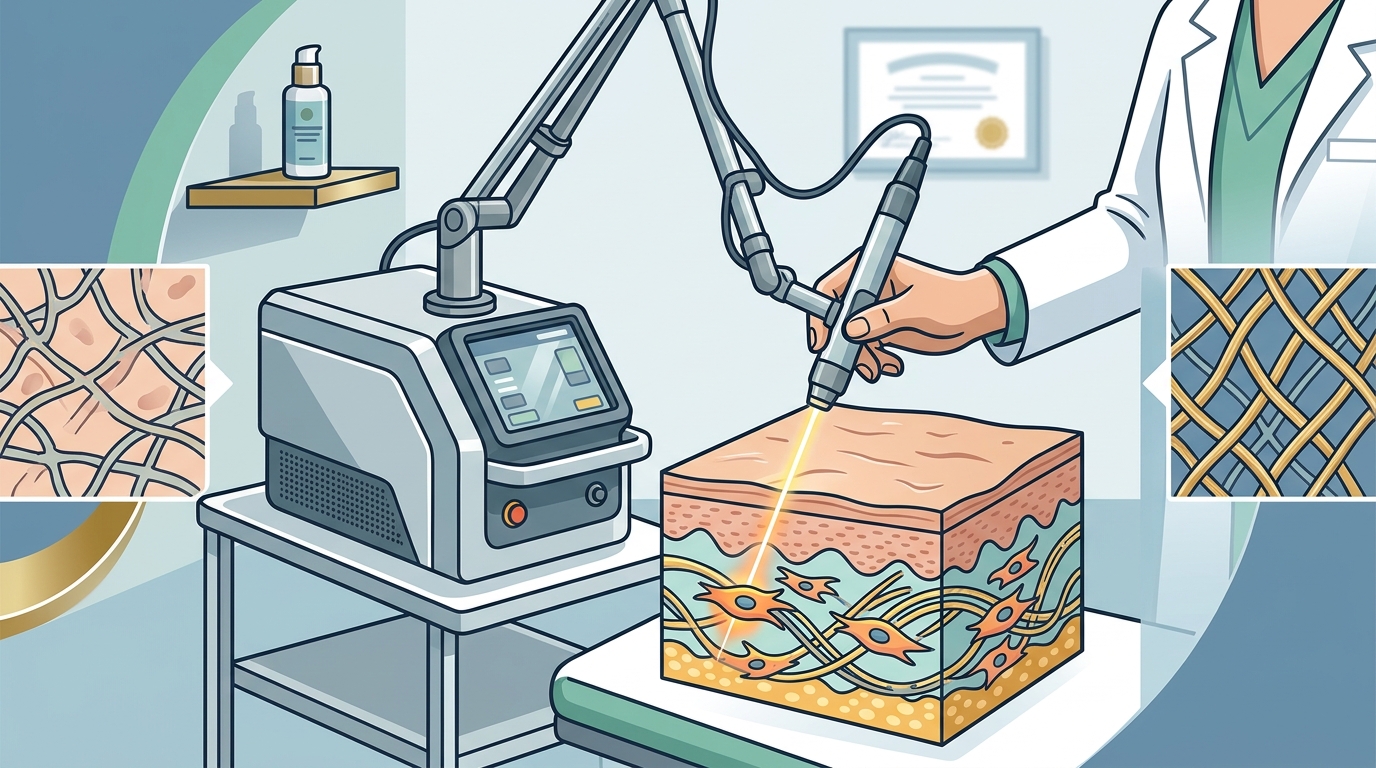
Laser resurfacing improves skin tightening by creating controlled thermal injury that triggers the body's natural healing response. This process stimulates fibroblasts to produce new collagen and elastin fibers. At ReEnvision Aesthetics and MedSpa in Simi Valley, we use these technologies to address texture, tone, and laxity. The result is firmer, smoother skin with a more youthful appearance. For additional details, review the reenvisionmedspa com.
The Biological Mechanism of Laser Resurfacing
When the laser energy penetrates the dermis, it causes immediate thermal contraction of existing collagen fibers. This provides an initial tightening effect. More importantly, the heat shock activates fibroblasts, the cells responsible for producing structural proteins. These cells begin synthesizing new type I and type III collagen over the following weeks and months. For additional details, review the Customer Experience.
This neocollagenesis is the key to long-term improvement. The new collagen fibers are denser and more organized than the old, degraded ones. This structural remodeling leads to sustained skin tightening and improved elasticity. The process is gradual, with most patients seeing significant changes between three and six months post-treatment. For additional details, review the Frequently Asked Questions.
Types of Laser Resurfacing Technologies
Fractional laser resurfacing is a technique that treats a fraction of the skin at a time, allowing for faster healing. This approach balances efficacy with downtime. It is often preferred for patients who cannot take extended time off work. The fractional pattern allows the untreated skin to serve as a reservoir for rapid healing. For additional details, review the About.
At ReEnvision Aesthetics and MedSpa, we evaluate each patient's skin type, concerns, and lifestyle to select the appropriate technology. The choice between ablative and non-ablative depends on the severity of laxity and the patient's tolerance for recovery. Personalized treatment planning is essential for optimal outcomes.
Collagen Production and Skin Remodeling
Collagen production is the biological process by which fibroblasts synthesize and assemble collagen proteins in the dermis. This process is central to the long-term benefits of laser resurfacing. The heat from the laser creates a wound-like environment that signals the body to repair and strengthen the tissue.
Studies have shown that laser-induced collagen remodeling can continue for up to one year after treatment. The new collagen improves skin thickness and density. This structural change is what provides the lasting tightening effect. It is not just a temporary plumping, but a fundamental improvement in skin quality.
The remodeling process also affects elastin, another key structural protein. Improved elastin content enhances skin's ability to snap back after stretching. This combination of new collagen and elastin results in firmer, more resilient skin. Patients often notice a reduction in fine lines and wrinkles as the skin becomes thicker and more supportive.
Recovery and Long-Term Results
Recovery from laser resurfacing varies depending on the type of laser used. Ablative procedures typically involve a healing period of one to two weeks, with redness lasting several weeks. Non-ablative treatments have a shorter recovery, often just a few days of redness and swelling. Proper aftercare is crucial for minimizing complications and maximizing results.
Long-term results from laser resurfacing are durable, especially when combined with a consistent skincare routine. The new collagen continues to mature and strengthen over time. Maintenance treatments may be recommended to sustain the results. At ReEnvision Aesthetics and MedSpa, we provide comprehensive aftercare instructions and follow-up appointments to monitor progress.
Safety and Candidate Selection
Laser resurfacing is a safe procedure when performed by a qualified medical professional. However, it is not suitable for everyone. Candidates should have realistic expectations and be in good general health. Certain conditions, such as active infections or a history of keloid scarring, may contraindicate the procedure.
A thorough consultation is the first step in determining candidacy. At ReEnvision Aesthetics and MedSpa, we assess skin type, medical history, and aesthetic goals. We discuss potential risks, including temporary redness, swelling, and changes in pigmentation. Informed consent is a critical part of the process.
Key Takeaways
- Laser resurfacing triggers a wound healing response that stimulates new collagen production.
- Fractional lasers provide a balance between efficacy and downtime, making them a popular choice.
- Collagen remodeling can continue for up to a year after treatment, leading to durable results.
- Proper aftercare, including sun protection, is critical for minimizing risks and maximizing benefits.
- Individual candidacy depends on skin type, medical history, and realistic expectations.
- Consulting with a qualified provider ensures safe and personalized treatment planning.
Frequently Asked Questions
How long does it take to see results from laser resurfacing?
Initial tightening may be visible immediately after the procedure. However, the most significant improvements in collagen production and skin texture typically appear between three and six months post-treatment. The remodeling process can continue for up to a year.
Is laser resurfacing painful?
Discomfort is managed with topical anesthetics or local anesthesia, depending on the procedure. Ablative lasers are more intense and may require stronger numbing. Most patients describe the sensation as a warm or stinging feeling. Pain levels vary by individual and laser type.
How many treatments are needed for optimal results?
The number of treatments depends on the severity of skin concerns and the type of laser used. Ablative lasers often require a single session for significant results. Non-ablative fractional lasers may require a series of three to five sessions spaced several weeks apart for cumulative improvement.
Can laser resurfacing be combined with other treatments?
What are the potential side effects of laser resurfacing?
How long do the results of laser resurfacing last?
Results from laser resurfacing are long-lasting, as the new collagen continues to mature. However, the natural aging process continues, so maintenance treatments may be recommended every one to two years. A consistent skincare routine with sun protection helps preserve the results. Learn more: reenvisionmedspa com.